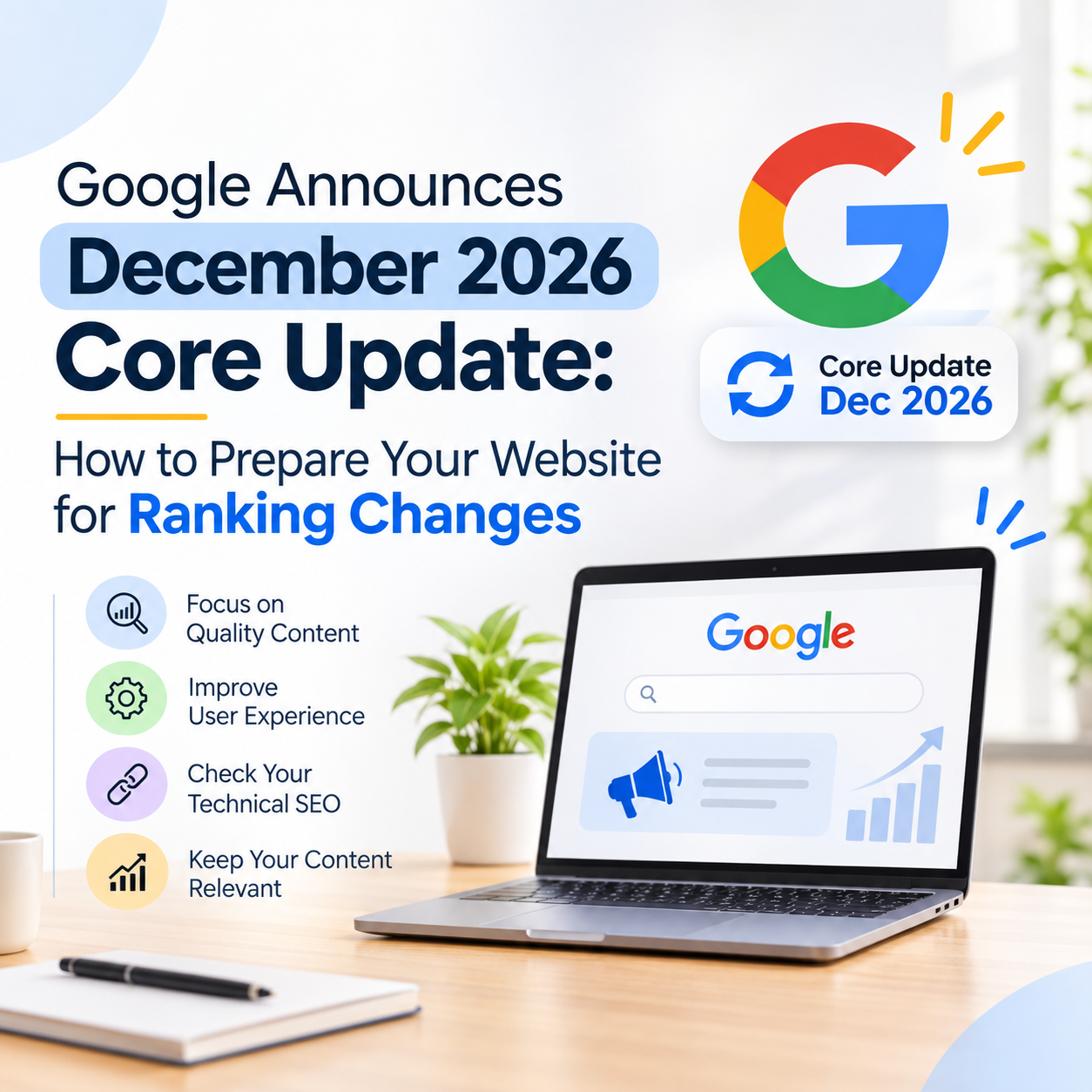
Google Announces December 2026 Core Update: How to Prepare Your Website for Ranking Changes
Google keeps enhancing its search engine to enable users to access more relevant and useful information. In this regard, Google is rolling out its December 2026 Core Update to change how search results will be interpreted and ranked.
Google made this announcement on November 24, 2026, after having conducted the November 2026 Core Update. The official announcement by Google indicates that this update will make improvements to how its systems interpret and rank relevant search results. Relevant search results in this case include those that give solutions to long and complex search queries. This update will also enable improved personalization for users who have activated the personalization feature.
For website owners, bloggers, SEO experts, and digital marketers, the December 2026 Google Core Update is an important topic to pay attention to.
However, how will this update change search results? Will there be any changes to how websites will rank or attract traffic through search engines? What actions should be taken by website owners in preparing for the update?
This guide will tell you all you need to know about this update and give practical SEO tips to help prepare your website.
What Is the Google December 2026 Core Update?
A Google Core Update is a broad improvement to Google’s search ranking systems. These updates help Google understand content better and identify which pages are most relevant and useful for a particular search.
Unlike updates that target a specific spam practice, a core update can influence how Google evaluates and ranks many different types of content across websites.
Google officially announced the December 2026 Core Update on November 24, 2026. The update is scheduled to roll out sometime in December 2026.
As of November 27, 2026, the rollout has not started.
The main focus areas mentioned in Google’s announcement include:
- Better understanding and ranking of relevant content.
- Improved understanding of longer and more complex search queries.
- Improvements to personalized search results for users who have enabled personalization.
The update will apply to all locations and languages where Google Search is available.
This means websites across different industries and regions should monitor their search performance during the rollout.
Why Has Google Announced the December 2026 Core Update?
Google regularly updates its search systems to improve the quality of search results and provide a better experience for users.
People are no longer searching only with short keywords. They often use detailed questions, specific requirements, and longer search phrases to find exactly what they need.
For example, instead of searching for:
“Best digital marketing agency”
A user might search for:
“Which digital marketing agency is best for a small business looking to generate more leads?”
These searches have different levels of detail and intent.
Google’s upcoming December 2026 Core Update aims to improve how its systems understand and rank relevant content, including content that answers longer and more complex questions.
For website owners, this is a good reason to focus on creating useful, detailed, and user-friendly content rather than publishing articles only to target keywords.
Key Changes to Expect From Google's December 2026 Core Update
Google has shared some information about the update, although it has not disclosed every technical ranking change. Here are the main areas mentioned in the official announcement.
1. Better Understanding of Relevant Content
Content relevance plays an important role in search rankings.
Google wants to understand how closely a webpage matches what someone is actually looking for.
For example, if a user searches for website speed optimization, a page discussing practical ways to improve website loading speed may be more relevant than a general article about digital marketing.
Website owners should focus on answering the main question clearly and providing information that genuinely helps readers.
2. Improved Understanding of Longer and Complex Search Queries
Users often search using complete questions instead of short keywords.
For example:
- How can I improve my website ranking on Google?
- Why is my website traffic decreasing suddenly?
- What are the best SEO strategies for a new business website?
Google has announced improvements to how its systems understand and rank relevant content for longer and more complex questions.
This makes it important to create content that addresses specific user questions instead of simply repeating the same keyword throughout an article.
3. Improvements to Personalized Search Results
Google has also mentioned improvements to personalized search results for people who have search personalization enabled.
Personalization can influence the ordering or presentation of search results based on information and preferences associated with a user’s Google experience.
However, this does not mean that every search result will be personalized or that all users will see completely different results.
Website owners should continue focusing on relevant, helpful content rather than trying to optimize for an individual user’s search history.
4. More Attention to User Search Intent
Search intent refers to the reason behind a user’s search.
For example, someone searching for “what is SEO” wants to understand the concept, while someone searching for “SEO services for small businesses” may be looking for a service provider.
Your content should match the purpose behind the search.
Before writing a blog, understand what information your audience expects to find and make sure your article provides a clear answer.
How Can the December 2026 Core Update Affect Website Rankings?
Google Core Updates can lead to changes in search visibility, keyword positions, and organic traffic.
Some websites may experience improvements, while others may notice ranking drops or fluctuations.
However, Google has not announced that any particular website category or industry will automatically lose rankings because of this update.
Here are some possible changes website owners should monitor:
- Changes in keyword rankings
Some of your important keywords may move up or down in Google search results during the rollout.
- Changes in organic traffic
Your website may experience fluctuations in organic traffic as Google’s ranking systems are updated.
- Changes in page visibility
Some blog posts and landing pages may receive more search impressions, while others may receive fewer.
- Different search result experiences
Personalized search improvements may influence how some results are ordered or displayed for users who have personalization enabled.
Remember that ranking fluctuations do not automatically mean your website has received a penalty.
10 Practical SEO Tips to Prepare Your Website for the December 2026 Core Update
You cannot control Google’s algorithm, but you can improve your website’s overall content quality and user experience.
Here are ten practical steps worth following.
1. Create Helpful and Original Content
Your content should solve a real problem or answer a genuine question.
Avoid publishing articles that simply repeat information already available on other websites.
Try to include:
- Original explanations and examples.
- Practical suggestions based on experience.
- Useful information that answers readers’ questions.
- Clear and accurate information.
- Relevant examples from your industry.
The goal is to give readers a reason to visit your website and trust your information.
2. Understand Search Intent Before Writing
Keyword research is important, but understanding search intent is equally important.
Before creating a blog, search for your target keyword and understand what type of information users expect.
For example, if your target keyword is “Google December 2026 Core Update,” readers may want to know:
- What the update is.
- When it will roll out.
- What changes Google has announced.
- How it may affect website rankings.
- How to prepare their websites.
Covering these questions can make your article more useful.
3. Update Old and Outdated Blog Posts
Review your existing website content regularly.
Some older articles may contain outdated information, broken links, incorrect statistics, or irrelevant examples.
Update them with accurate information and improve sections that no longer meet readers’ needs.
However, do not change content just for the sake of making it look fresh. Every update should provide genuine value.
4. Improve Website Loading Speed
Website performance is an important part of providing a good user experience.
Make sure your website loads smoothly on both desktop and mobile devices.
You can improve performance by:
- Compressing large images.
- Removing unnecessary plugins.
- Using reliable hosting.
- Reducing unnecessary scripts.
- Using browser caching where appropriate.
- Monitoring Core Web Vitals.
A fast and responsive website makes it easier for visitors to access your content.
5. Make Your Website Mobile-Friendly
Many people browse websites using smartphones.
If your website is difficult to use on mobile devices, visitors may struggle to read your content or navigate between pages.
Check that:
- Text is easy to read.
- Buttons are easy to tap.
- Images fit the screen properly.
- Menus work correctly.
- Pages do not require horizontal scrolling.
A mobile-friendly design improves accessibility and usability.
6. Use Keywords Naturally
Keywords help search engines understand the subject of your content.
However, repeating the same keyword unnecessarily can make an article difficult to read.
Use your primary keyword naturally in:
- The SEO title.
- The H1 heading.
- The introduction.
- Relevant H2 and H3 headings.
- The meta description.
- The URL, where appropriate.
You can also use related keywords and natural variations throughout the article.
Always write for people first.
7. Add Relevant Internal Links
Internal linking helps users discover other useful pages on your website.
For example, if you publish an article about Google’s December 2026 Core Update, you can link to related articles about:
- On-page SEO techniques.
- Technical SEO.
- Keyword research.
- Website speed optimization.
- Content marketing strategies.
Use descriptive anchor text so readers understand what they will find after clicking a link.
8. Build Trust With Accurate Information
Trust is important, especially when publishing content about SEO, technology, business, or other topics where readers depend on accurate information.
To improve the reliability of your content:
- Use trustworthy sources.
- Link to official Google documentation when discussing Google updates.
- Check facts before publishing.
- Correct outdated information.
- Provide author information where relevant.
- Clearly distinguish confirmed facts from opinions or predictions.
Avoid presenting guesses about Google’s algorithm as confirmed ranking factors.
9. Improve Your Website’s User Experience
A good website should make it easy for visitors to find what they need.
Use clear headings, short paragraphs, readable fonts, and simple navigation.
Avoid excessive pop-ups, distracting advertisements, and unnecessary design elements that interrupt the reading experience.
Make sure every important page provides a clear purpose and useful information.
10. Monitor Your Website With Google Search Console
Google Search Console is one of the most useful free tools for understanding your website’s performance in Google Search.
During and after the December 2026 Core Update, monitor:
- Total clicks.
- Total impressions.
- Average click-through rate.
- Average search position.
- Important keyword performance.
- Pages gaining or losing visibility.
Compare similar periods and check whether changes affect specific pages, keywords, or the entire website.
Do not make major website changes based on one day’s traffic fluctuations.
Final Thoughts
Google’s December 2026 Core Update shows once again that SEO is not simply about keywords and backlinks. The creation of useful content, understanding of user intent, provision of relevant data, and enhancement of site experience are key aspects of an effective SEO approach.
Despite the announced enhancements in content relevance assessment, handling of longer searches, and personalization, it remains unclear how exactly the update will affect rankings.
It is advisable for website owners not to rush into changes based on speculation and rumors.
The best long-term SEO practice consists in creating useful content, working on the usability of your site and ensuring relevance of the provided information.
Just stick to this simple advice and monitor further developments in SEO by watching official Google updates concerning the December 2026 Core Update.
FAQs
1. What is the Google December 2026 Core Update?
The Google December 2026 Core Update is an upcoming broad improvement to Google’s search ranking systems. It focuses on understanding and ranking relevant content, including content answering longer and more complex questions, as well as improving personalized search results.
2. When did Google announce the December 2026 Core Update?
Google announced the December 2026 Core Update on November 24, 2026.
3. Has the December 2026 Core Update started rolling out?
As of November 27, 2026, Google has announced the update in advance, but the rollout has not yet started. It is scheduled for release sometime in December 2026.
4. Will the December 2026 Core Update affect website rankings?
Core updates can cause changes in search rankings, organic traffic, and website visibility. However, the exact impact of the December update is not yet known.
5. How can I prepare my website for Google’s December 2026 Core Update?
Focus on original and helpful content, understand search intent, improve mobile usability, optimize website performance, use natural keywords, and monitor your website through Google Search Console.
6. Can AI-generated content rank on Google?
Yes. AI-generated content can appear in Google Search when it is useful, original, accurate, and created to help users. Automatically generated low-quality content created primarily to manipulate rankings can violate Google’s spam policies.
7. What should I do if my website traffic decreases after a Google Core Update?
First, check whether the update has finished rolling out. Then review Google Search Console, identify affected pages, compare performance, and improve content quality and user experience where necessary.
8. Is the Google December 2026 Core Update applicable worldwide?
Yes. Google’s announcement states that the update applies to all locations and languages where Google Search is available.
9. Does a Google Core Update mean my website has received a penalty?
No. A ranking decrease after a core update does not automatically mean your website has received a penalty. Core updates broadly reassess how Google’s systems rank content.
10. Where can I check official Google Core Update announcements?
You can visit the Google Search Status Dashboard to check confirmed updates and their rollout information.
Official resource: https://status.search.google.com/